
Best Golf Balls for High Handicap Players
For many high-handicap golfers, price, feel, durability and manageable driver spin matter more than buying a tour label. This catalog shortlist combines lower recorded compression with soft, distance or value positioning; it is a starting set, not a claim that one construction fits every high-handicap swing. Our top pick is the Cut Golf Cut White (70 compression, $15/dozen). 6 models qualify below, ranked best-first.
How this list works: this is a specification-based shortlist from Stymie's current catalog, ordered by the published rules for this guide—not an independent robot or player test. All 6 picks have a dated catalog source label, and 6 have a manufacturer product reference on file. Use the list to narrow candidates, then compare full construction and test finalists on the course or a launch monitor.
Latest included source review: .
- 1

 Cut Golf·Value·$15 · Comp 70
Cut White
70 compression, distance-focused build, under $30 per dozen.
- 2
 See on Amazon →
 Pinnacle·Soft feel·$15 · Comp 55
Soft
55 compression, distance-focused build, under $30 per dozen.
- 3
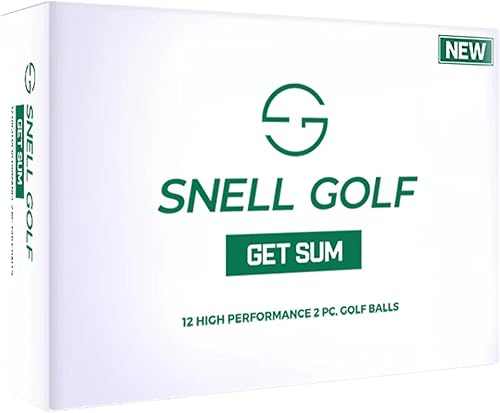 See on Amazon →
 Snell·Value·$16 · Comp 70
Get Sum
70 compression, distance-focused build, under $30 per dozen.
- 4See on Cut Golf →Cut Golf·Distance·$18 · Comp 75
Cut Red
75 compression, distance-focused build, under $30 per dozen.
- 5
 See on Amazon →
 Wilson·Soft feel·$20 · Comp 50
Soft TRK360
50 compression, distance-focused build, under $30 per dozen.
- 6

Tour Edge·Value·$20 · Comp 55
Hot Launch
55 compression, distance-focused build, under $30 per dozen.
Frequently asked
Should high handicappers avoid tour balls?
Not automatically. A urethane tour ball can help a player who values approach and greenside control, regardless of handicap. A less expensive ionomer model may be the better practical choice when budget, durability or a lower-spin positioning matters more.
Is a $25 ball worse than a $50 ball for a high handicap?
No. Price usually reflects materials, construction, branding and market position—not a guaranteed scoring result. The better value is the model that produces predictable flight and short-game response for the player and is affordable enough to use consistently.